Digital accessibility on the internet
Good and bad practices
Legal requirements
What should you know about the formal requirements for digital accessibility?
Since 23 September 2020, all websites of public bodies in Poland must meet the requirements of the Act on Digital Accessibility (Journal of Laws 2019, item 848) and EU Directive 2016/2102. Mobile applications have been covered by a similar obligation since 23 June 2021. Compliance with WCAG 2.1 at level AA or higher is now a standard not only for public administration but increasingly also for private companies.
What does “WCAG 2.1 AA compliance” mean?
WCAG 2.1 is a set of guidelines, developed for years by the W3C (World Wide Web Consortium), that a website should meet to give people with disabilities a good chance of using it.
WCAG 2.1 AA compliance means, among other things, sufficient text contrast, full keyboard navigation and a clear document structure — you can find more information in our accessibility course.
If you want to avoid legal risk, improve your SEO and brand image and, above all, provide full access to your services, check our tips and use a professional accessibility audit. Take care of inclusivity.
What are the consequences of non-compliance?
The legislator has provided for financial penalties:
- Up to PLN 10,000 for failing to ensure accessibility
- Up to PLN 5,000 for failing to publish an accessibility statement
Recommended reading
A reader-friendly compendium of knowledge about implementing accessibility in your own company, namely the Accessibility Coordinator's Essentials (in Polish)
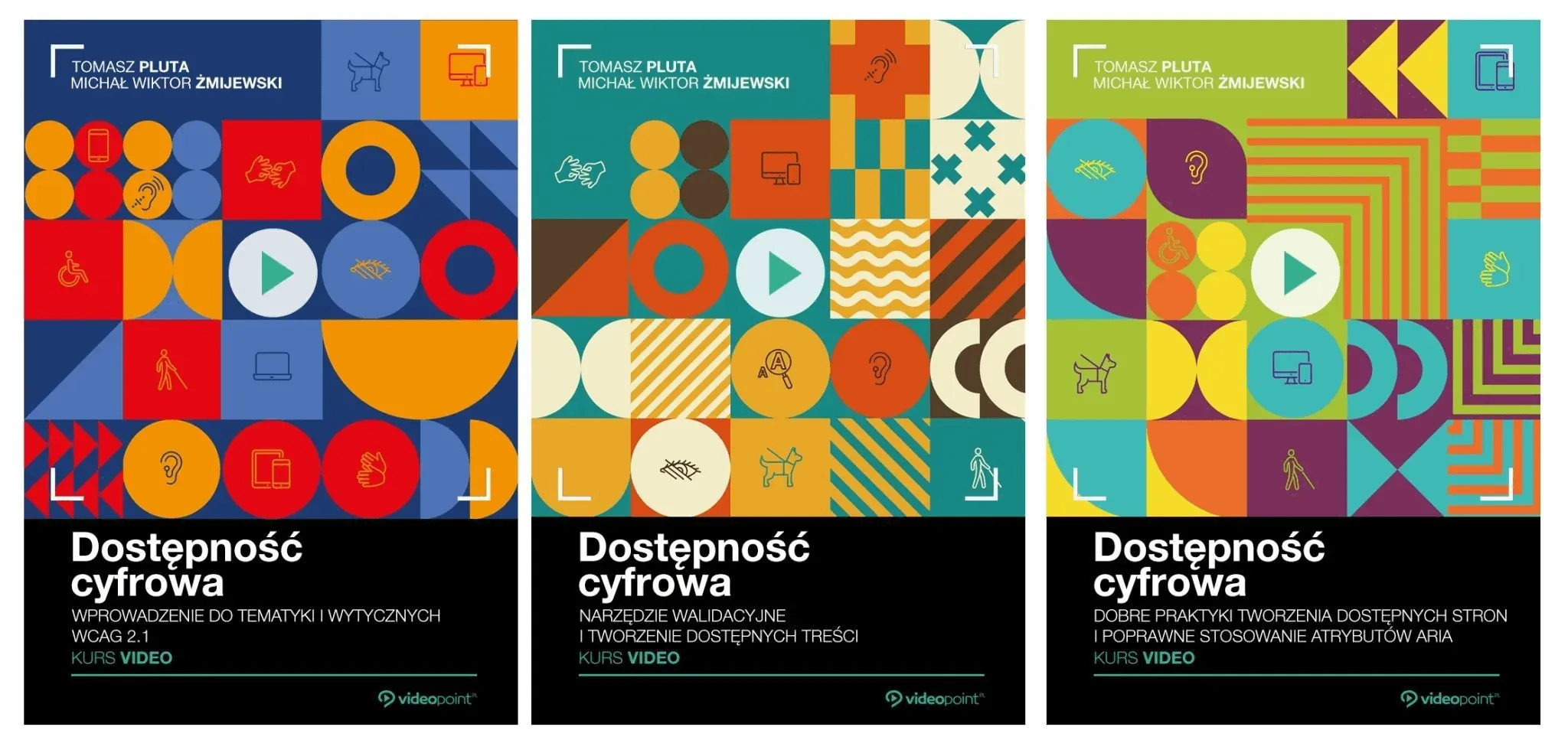
Our three video courses:
- Introduction to the topic and the WCAG 2.1 guidelines (course on the HELION publisher's website)
- Validation tools and creating accessible content (course on the HELION publisher's website)
- Good practices for building accessible websites and correct use of ARIA attributes. (course on the HELION publisher's website)